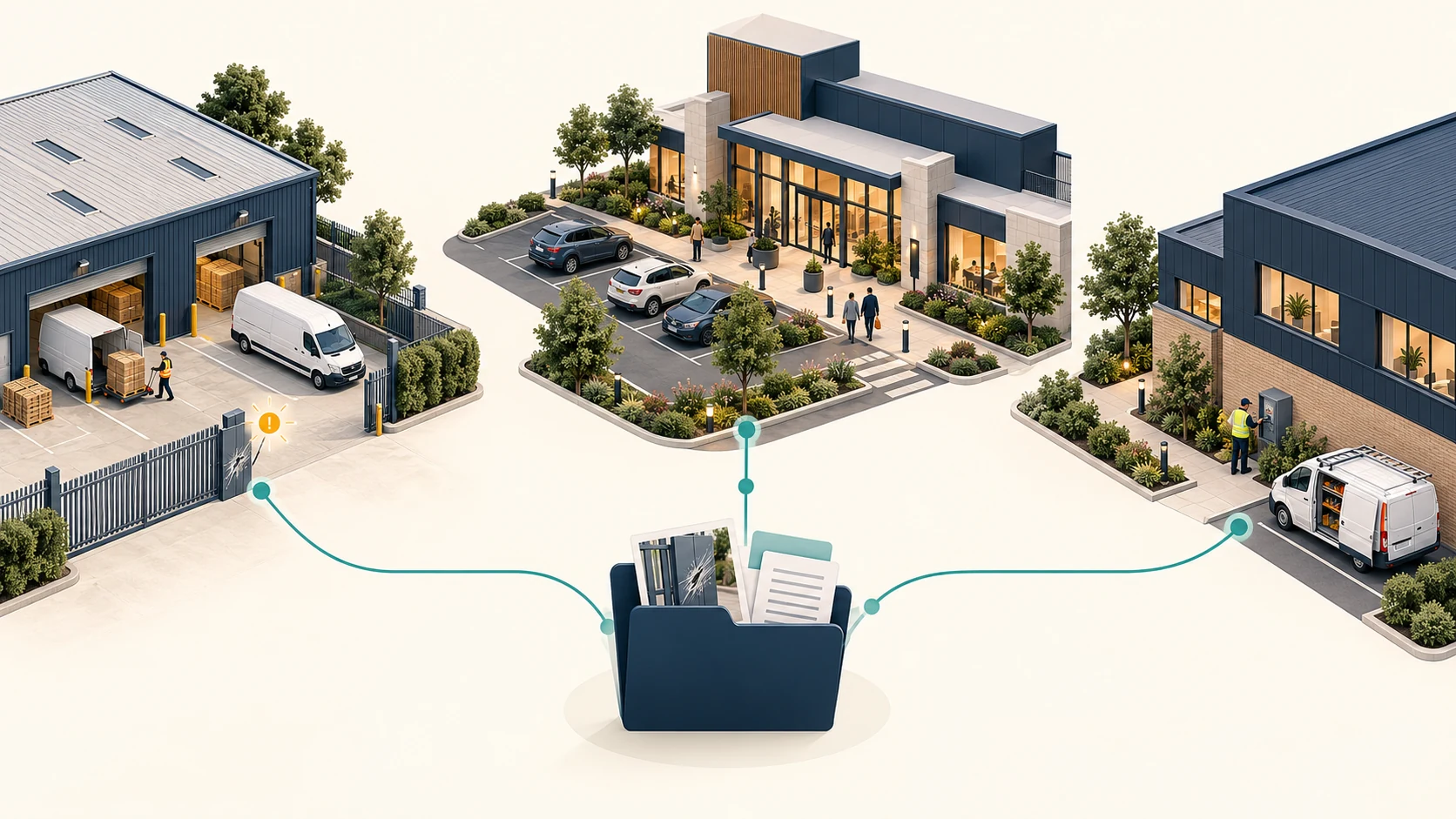
A delivery van clips a customer’s gate. A visitor damages a parked car outside a branch. A contractor reverses into a loading-bay door. Different businesses, different settings, but often the same problem afterwards: the details are scattered between an email, a photograph on someone’s phone and a conversation that nobody wrote down.
The person who saw what happened needs to get back to work. The manager responsible for resolving it may be at another site. If insurance becomes involved, the broker needs evidence that nobody thought to collect at the time. By then, the incident has become a reconstruction exercise.
IncidentLoop brings that process into one structured record, from the initial report through internal resolution or an insurance claim.
A wider problem than one industry
Dealer groups are a natural example and who we originally developed this for: employees, customer vehicles, forecourts, workshops and public access all overlap. But none of those underlying challenges is exclusive to a dealership.
The same coordination problem appears wherever a business has people on the move, premises to manage and physical incidents to resolve. We think about that audience in three overlapping groups:
- Fleet and mobile-workforce businesses. Transport and logistics operators, couriers, vehicle rental companies, maintenance contractors and field-service teams. Incidents can happen on the road, at a depot or on a customer’s property.
- Multi-site and public-facing businesses. Retail groups, builders’ merchants, hotels, leisure operators and visitor attractions. Branches, car parks, deliveries and public access mean the relevant information can sit with several different people.
- Property and asset operators. Property managers, housing providers, facilities management businesses and industrial operators. Responsibility for buildings, sites and physical assets creates its own mix of damage, contractors and third-party involvement.
Construction businesses, education estates, care groups and public-sector organisations can share these characteristics too. The relevant fit is their vehicle and property incident process, rather than an assumption that every specialist reporting requirement is the same.
Company size alone is not the deciding factor. A smaller operator with a busy fleet and several premises may have more need for a consistent process than a much larger office-based business. What matters is how often incidents pass between people, sites and outside parties, and how difficult it is to keep responsibility and cost visible.
One incident, different responsibilities
The central tension is straightforward. The operational team needs capture to be practical while the details are fresh. The person handling the outcome needs enough information to act. When a broker is involved, missing evidence means another request back to the business.
IncidentLoop organises the record into structured sections covering people, photos, vehicles, properties and costs. It distinguishes vehicle and property incidents, records whether they happened on-site or off-site, and keeps the relevant location with the case.
That gives the people reporting the incident and the people resolving it a shared structure to work through. It does not remove the need to gather evidence; it makes the outstanding work easier to see.
Not every incident needs an insurance claim
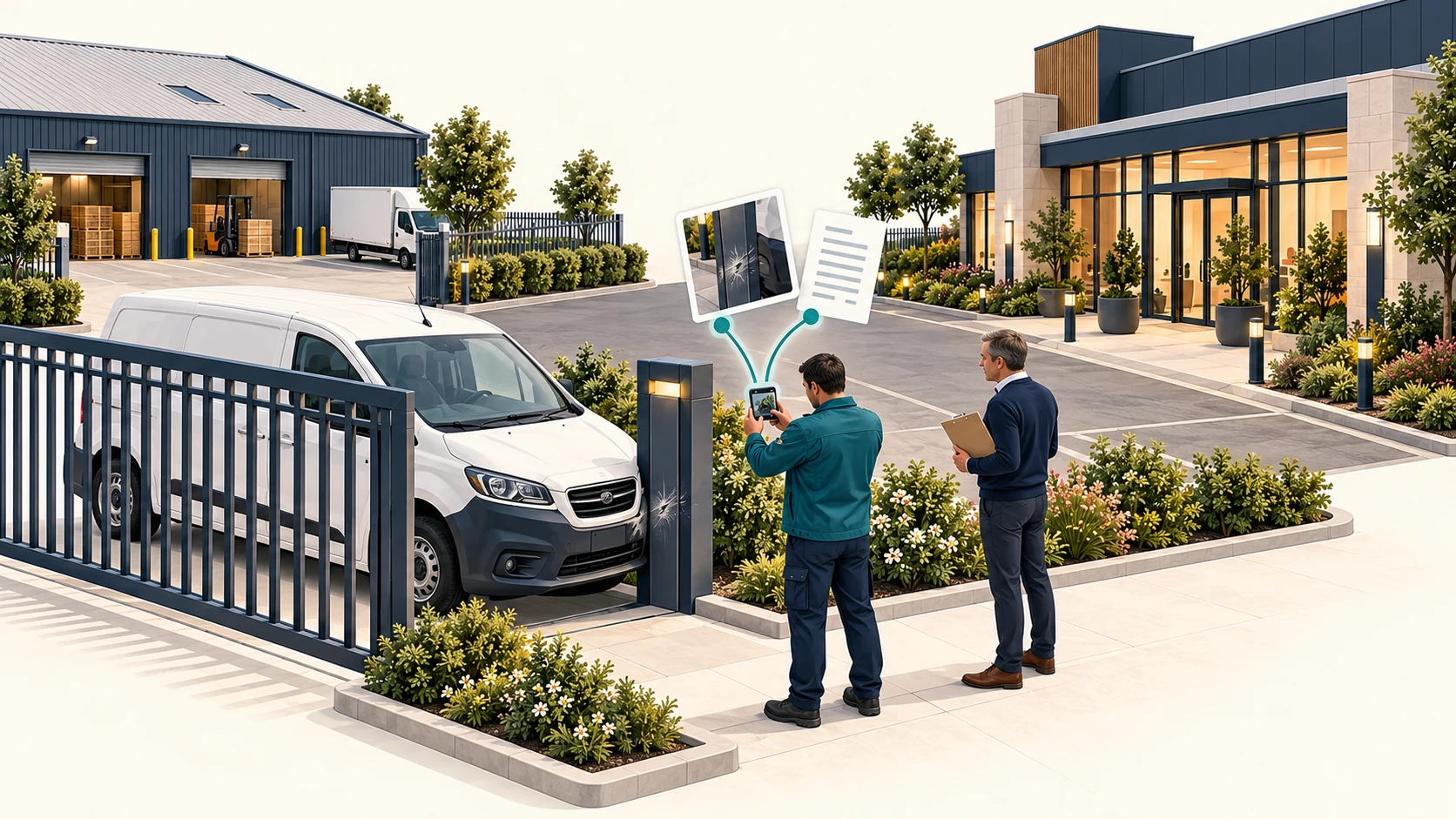
A business may decide to handle an incident internally or progress it through insurance. IncidentLoop records that route against the incident, so the record remains useful whichever path is chosen.
For vehicle incidents, a registration-based DVLA lookup helps populate vehicle details rather than relying entirely on manual entry. Costs can be allocated to a location and department, alongside details of the insurance excess and who is covering it.
The point is not simply to collect a report. It is to keep the evidence, decisions and financial follow-through connected to what happened.
A clearer handover to the broker

Where an incident becomes a claim, the broker works from the same structured case rather than a separate collection of emails. IncidentLoop’s broker-facing views support that handover through:
- Submission readiness: visibility of evidence-section completion, helping identify what still needs attention before submission.
- Action queues and stale-case flags: a way to distinguish work awaiting broker attention from cases still requiring information or other action.
- A consistent status pipeline: stages covering broker involvement, requested information, repair approval, repairs, payment and closure.
- Outcome and recovery reporting: visibility of claim costs, excess recovery and fault outcomes.
The benefit is a clearer handover between the business and its broker, with less dependence on someone remembering which email contained the missing detail.
See the pattern, not just the individual case
A resolved incident still has something to tell the business. Are similar incidents recurring at one site? Where are cases waiting for information? Which parts of the reporting process are consistently incomplete?
IncidentLoop’s location, pipeline and section-performance reporting gives teams a basis for investigating those questions. Consistent records can inform conversations about working practices, training and site conditions; they do not automatically establish the cause of an incident.
Built around operational complexity, not a sector label
The common thread is a business with vehicles or property, people responsible for them, and incidents that need coordinated follow-through. Dealer groups belong in that picture, alongside fleet operators, mobile-workforce businesses, multi-site operators and property-led organisations.
IncidentLoop’s focus is vehicle and property incidents and their resolution. That is different from claiming to replace a complete health-and-safety platform, statutory reporting process, clinical incident system or safeguarding workflow.
If your incident process currently depends on scattered messages, local spreadsheets and repeated requests for evidence, talk to us about how your team works. You can also explore IncidentLoop before arranging a walkthrough.